Trail Running Shoes vs Walking Shoes

Trail running shoes and walking shoes may look similar, but they are designed for very different environments and movement patterns. Trail shoes prioritise traction, protection, and stability on uneven ground, while walking shoes focus on comfort and cushioning for repeated steps on firm surfaces.
Both can work for walking, but the best option depends largely on where you walk most often.
Quick Comparison:
| Feature | Trail Running Shoes | Walking Shoes |
| Terrain | Dirt, gravel, rocks, trails | Pavement, paths, urban surfaces |
| Outsole | Aggressive lugs for traction | Flat rubber for pavement grip |
| Cushioning | Moderate and firmer | Usually softer and more cushioned |
| Protection | Reinforced uppers, rock plates | Lightweight and flexible |
| Weight | Slightly heavier | Often lighter |
Traction and Outsoles
The most obvious difference is the outsole.
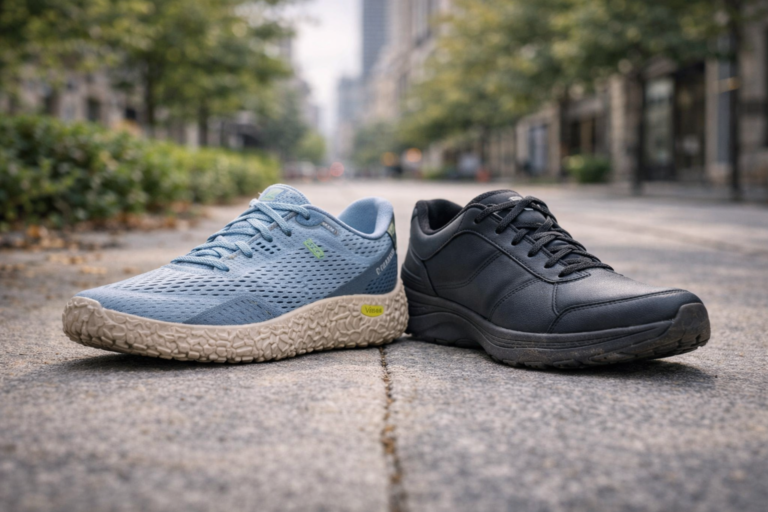
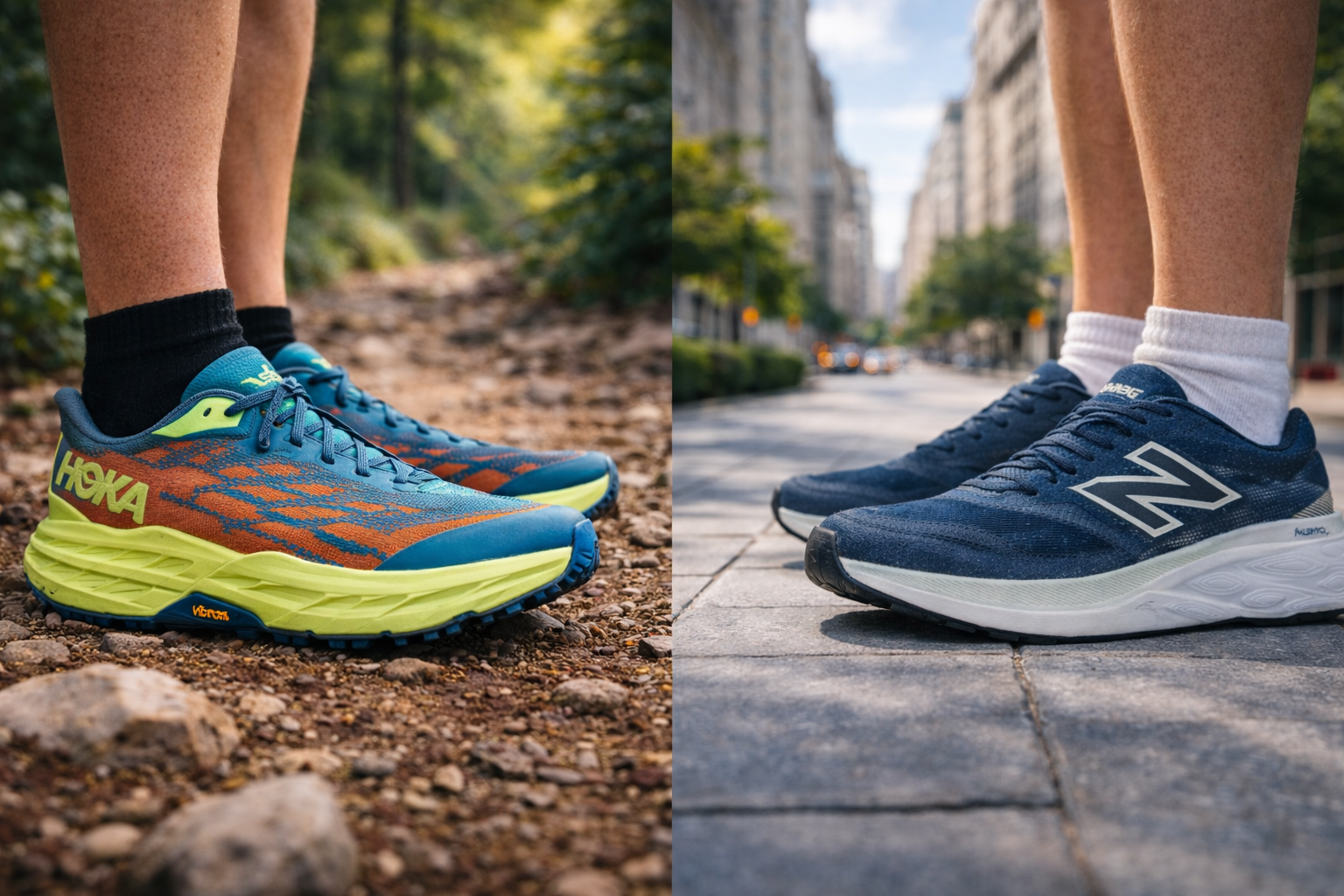
Trail running shoes have deep rubber lugs designed to grip loose terrain like dirt, mud, and gravel. These lugs dig into the ground and improve traction when running or walking on uneven surfaces.
Walking shoes, on the other hand, have flatter outsoles designed for consistent contact with pavement. This improves durability and stability on hard surfaces.
Because trail shoes use softer rubber for grip, they can wear down faster when used regularly on pavement.
Cushioning
Walking shoes typically have softer cushioning to absorb repeated impact on hard surfaces like asphalt or concrete.
Trail running shoes usually have firmer midsoles. This helps stabilise the foot on uneven terrain and prevents excessive twisting on rocks or roots.
For long city walking days—often 8–12 km or more—softer cushioning can make pavement walking more comfortable.
Stability and Protection
Trail running shoes are built to protect the foot from natural obstacles.
Many models include:
- reinforced toe caps
- thicker uppers
- rock plates in the midsole
These features protect against rocks, roots, and debris on trails.
Walking shoes usually prioritise flexibility and comfort rather than protection.
Also read: A comprehensive guide to walking shoes for city use.
Breathability
Walking shoes are often more breathable because they use lightweight mesh uppers with fewer reinforcements.
Trail shoes tend to use stronger materials to resist abrasion from rocks and branches. These reinforcements can slightly reduce airflow.
Weight and Flexibility
Walking shoes are usually lighter and more flexible because they are designed for steady forward walking motion.
Trail running shoes often have slightly heavier construction due to protective materials and aggressive outsoles.
However, they are still lighter than traditional hiking boots.
When Trail Running Shoes Are Better
Trail running shoes are usually the better choice if you walk:
- dirt trails
- gravel paths
- parks or nature reserves
- rocky or uneven terrain
Many hikers prefer trail running shoes because they provide good traction and lighter weight compared with hiking boots.
When Walking Shoes Are Better
Walking shoes usually work better if you walk mainly on:
- city streets
- concrete paths
- urban sightseeing routes
They provide softer cushioning that reduces fatigue during long days on hard surfaces.
FAQ
Can you walk in trail running shoes?
Yes. Trail running shoes can work very well for walking, particularly on dirt paths or uneven terrain.
Are trail running shoes good for city walking?
They can work, but the aggressive lugs may wear down faster on pavement and feel less smooth on hard surfaces.
Are walking shoes good for trails?
They are fine on well-maintained paths but may lack traction and protection on rocky or muddy trails.
Are trail running shoes better than hiking boots?
Trail running shoes are lighter and more flexible, while hiking boots provide more durability and ankle support.