The Ultimate Guide to City Walking Shoes (2026)

Cities are best explored on foot. Walking reveals architecture, neighbourhoods, cafés, parks, markets, and everyday local life that you simply miss when travelling by car or public transport.
But city walking also places real demands on your feet. Travellers commonly walk 8–12 kilometres per day while sightseeing, often covering 15,000–20,000 steps on hard surfaces like pavement, stone, and concrete. Over time, those repeated impacts can lead to fatigue, sore feet, and blisters if your footwear isn’t suited to the task.
The best city walking shoes balance cushioning, breathability, stability, durability, and comfort. This guide explains how to choose the right walking shoes for cities and connects to deeper guides that explore each topic in detail.
What Makes a Good City Walking Shoe
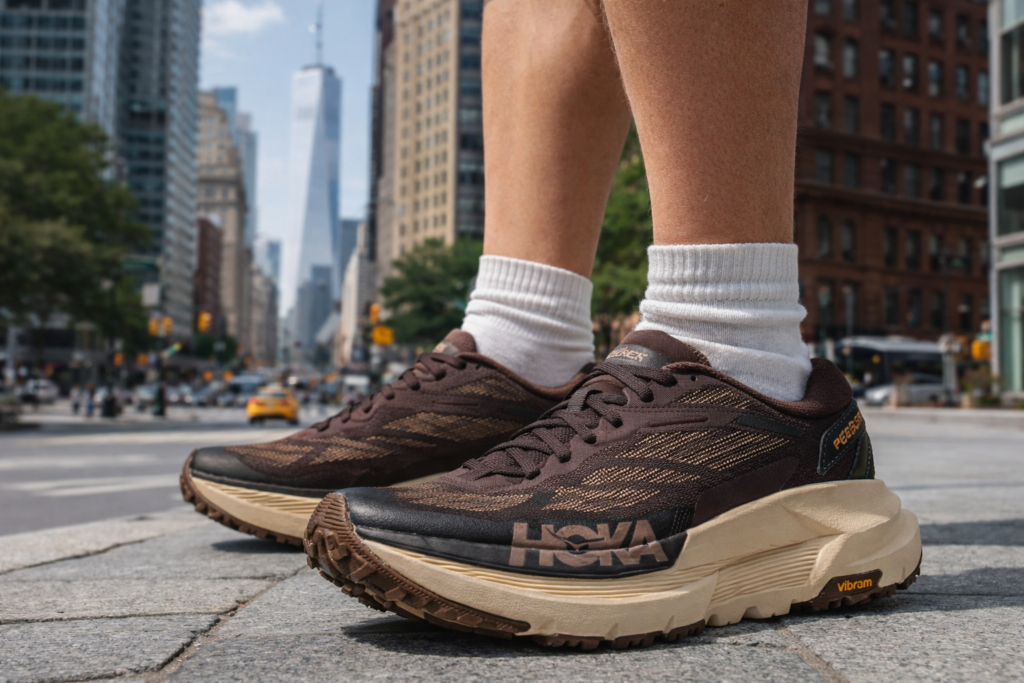
City walking is different from hiking or running. Surfaces are harder, distances are longer, and you may spend many hours on your feet.
Several features make a noticeable difference.
Cushioning
Urban surfaces provide very little natural shock absorption. Shoes with moderate to high cushioning help reduce the repeated impact from pavement.
Learn more: How Much Cushioning Do Walking Shoes Need?
Breathability
Walking generates heat and moisture inside shoes. Breathable materials allow airflow and help prevent overheating.
Lightweight construction
Lighter shoes reduce fatigue over long walking days.
Learn more: What Are the Lightest Walking Shoes for Travel?
Good fit
A secure fit prevents the foot from sliding inside the shoe, which helps reduce friction and blisters.
Learn more about how to fit shoes properly.
For a deeper breakdown of all the features that matter most, see: What Makes a Good City Walking Shoe?
Shoe Types for City Walking
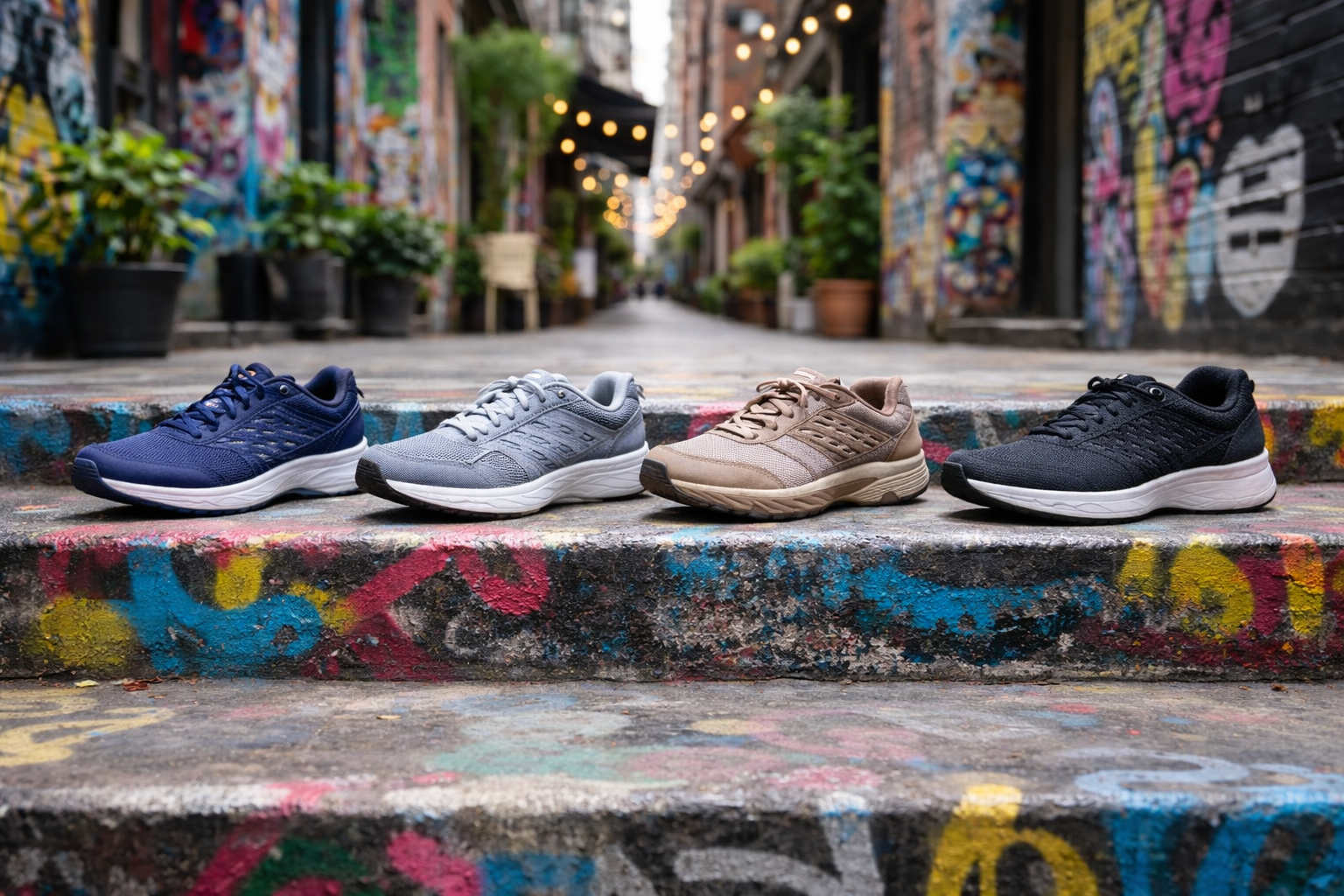
There isn’t just one type of shoe that works for urban walking. Several different designs can perform well depending on the situation.
Running Shoes
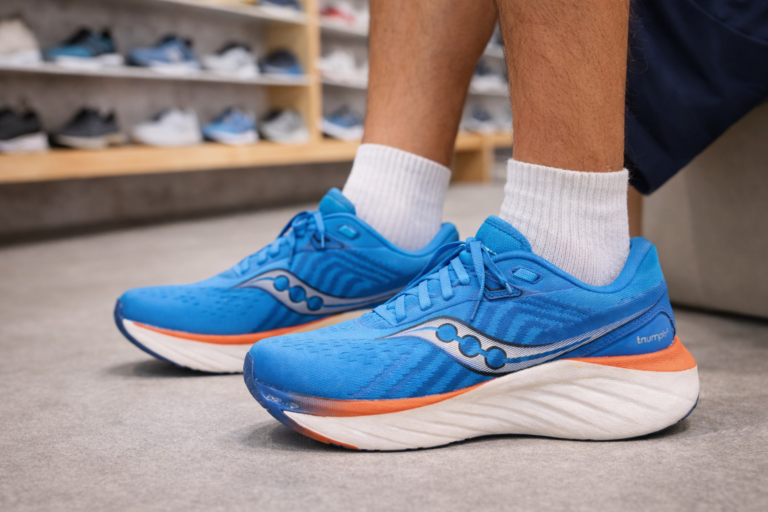
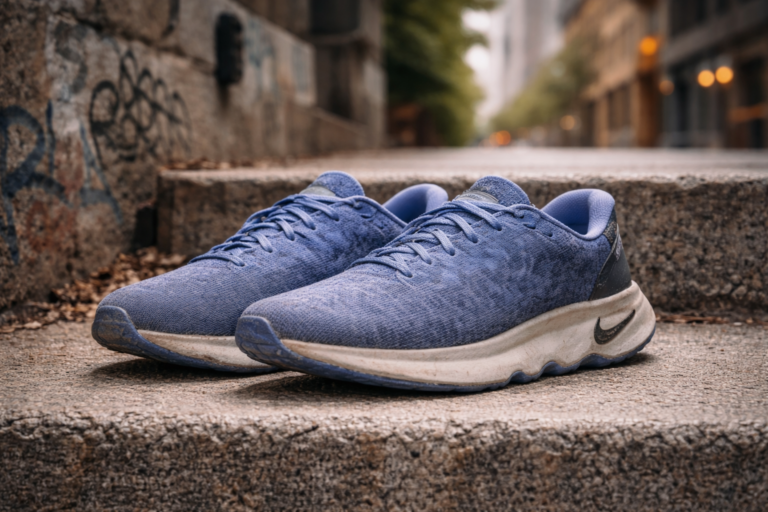
Many of the best city walking shoes are actually running shoes. They are designed to handle repeated impact and long distances.
Running shoes typically provide:
- strong cushioning
- breathable mesh uppers
- lightweight construction.
Walking Shoes
Traditional walking shoes are designed specifically for walking biomechanics. They often emphasise stability and durability.
These shoes are popular for everyday walking and travel.
Trail Running Shoes
Trail running shoes are built for dirt paths and uneven terrain. They offer stronger grip and additional protection.
However, their aggressive traction may feel less smooth on pavement.
Learn more: Trail Running Shoes vs Walking Shoes
Cushioning and Comfort
Cushioning plays a major role in walking comfort.
Each step creates impact that travels through the feet, ankles, knees, and hips. Cushioning helps absorb part of that impact and reduces fatigue over long distances.
There are three common cushioning styles.
- Minimal cushioning: Lightweight and flexible but may feel harsh on pavement.
- Moderate cushioning: Provides a balance of comfort and stability.
- Maximum cushioning: Uses thick midsoles to absorb significant impact.
For most city walking, moderate to high cushioning tends to work best.
For a deeper comparison see: Cushioned vs Minimal Walking Shoes
Walking Shoe Materials
The materials used in a shoe affect comfort, breathability, and durability.
Mesh
Mesh uppers are the most common design for walking shoes.
Advantages include:
- strong airflow
- lightweight construction
- faster drying
Leather
Leather shoes offer more structure and durability. They also provide slightly better protection from weather.
However, they tend to be heavier and less breathable.
Learn more: Leather vs Mesh Walking Shoes
Waterproof vs Breathable Shoes
Some walking shoes include waterproof membranes such as Gore-Tex. These can help keep feet dry in rain.
However, waterproof shoes often reduce airflow.
Breathable shoes usually provide better comfort in warm conditions because they allow heat to escape.
For a detailed comparison see: Waterproof vs Breathable Walking Shoes
How Long Walking Shoes Last
Walking shoes gradually lose cushioning as the midsole foam compresses.
Most walking shoes maintain their comfort for approximately 500–800 kilometres of use.
After this point the shoes may still look fine but often feel less comfortable during long walks.
For a detailed guide see: How Many Kms Do Walking Shoes Last?
Preventing Blisters During Long Walks
Blisters are one of the most common issues during long walking days.
They usually occur when friction, moisture, and pressure combine.
You can reduce the risk by:
- wearing moisture-wicking socks
- choosing properly fitting shoes
- breaking in new shoes gradually
- keeping feet dry
(Internal link: How to Avoid Blisters When Walking All Day)
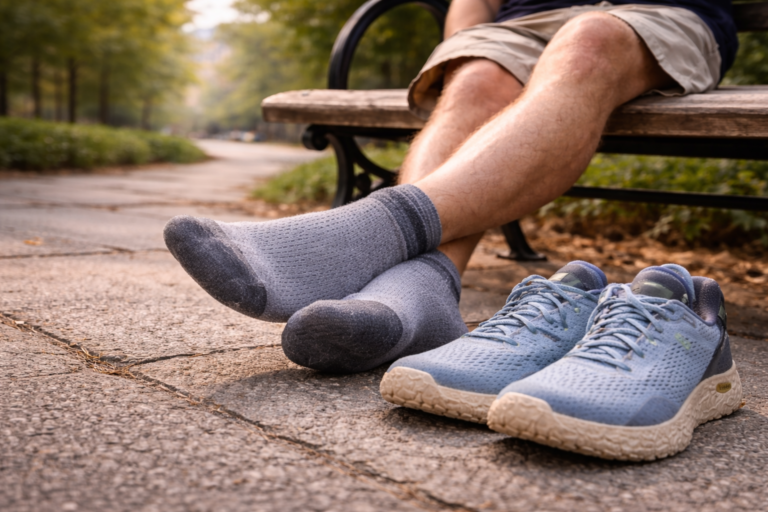
Socks also play a major role in comfort and blister prevention.
Learn more: Socks To Help Walk Long Distances.
Recommended Walking Shoe Brands
Several brands consistently produce high-quality walking shoes. Well-known brands include:
- Hoka
- Brooks
- New Balance
- ASICS
- On Running
- Skechers
Each brand emphasises slightly different strengths, such as cushioning, stability, or lightweight design.
Further reading:
- The Best Walking Shoe Brands for City Walking
- Hoka vs On Running: Which Is Better for City Walking?
Choosing the Right Shoe for Your Walking Style
The best walking shoe depends on several factors.
- Distance: Longer distances usually benefit from more cushioning.
- Climate: Breathable shoes work well in warm climates, while waterproof shoes may be useful in rainy destinations.
- Terrain: City streets require less traction than trails.
- Fit: Comfort and fit matter more than brand or style.
Trying shoes on and walking in them before purchasing is always recommended.
Frequently Asked Questions
What are the best shoes for city walking?
Shoes with moderate to high cushioning, breathable uppers, and lightweight construction tend to work best.
Are running shoes good for walking?
Yes. Running shoes are designed to absorb repeated impact and are often excellent for long walking days.
How many kilometres can you walk in a day comfortably?
Most travellers walk 8–12 kilometres per day, although some sightseeing days can exceed 15 kilometres.
Should city walking shoes be lightweight?
Lightweight shoes reduce fatigue over thousands of steps, but they still need enough cushioning and support.
Do walking shoes need to be broken in?
Many modern shoes require little break-in time, but it’s still best to test new shoes on shorter walks before using them for long days.
Final Thoughts
Walking is one of the best ways to explore a city. It allows you to discover neighbourhoods, architecture, food, and everyday local life at a slower and more meaningful pace.
But long days on pavement place real demands on your feet. Choosing the right walking shoes—ones that balance cushioning, breathability, stability, and comfort—can make a significant difference.
With the right footwear, exploring cities on foot becomes easier, more comfortable, and far more enjoyable.