How Many Kilometres Do Walking Shoes Last?

Walking shoes don’t last forever. Even if they still look fine on the outside, the cushioning inside gradually breaks down.
Most walking shoes last about 500–800 kilometres before their cushioning and support begin to decline. Lightweight models often wear out closer to 500 km, while more durable trail shoes may last up to 1,000 km.
For people who walk regularly, knowing when shoes wear out helps prevent sore feet, fatigue, and injuries.
Recommended reading: The Ultimate Guide to Shoes for City Walking.
Why Do Walking Shoes Wear Out?
The midsole does most of the work in a walking shoe. This foam layer absorbs impact every time your foot hits the ground.
Most midsoles are made from EVA or similar foam materials. With repeated compression, the foam gradually loses its ability to rebound and absorb shock.
Studies of athletic footwear suggest midsole foam can lose 30–40% of its shock absorption after several hundred kilometres of use. Once this happens, the shoe may still look fine externally, but the cushioning has effectively worn out.
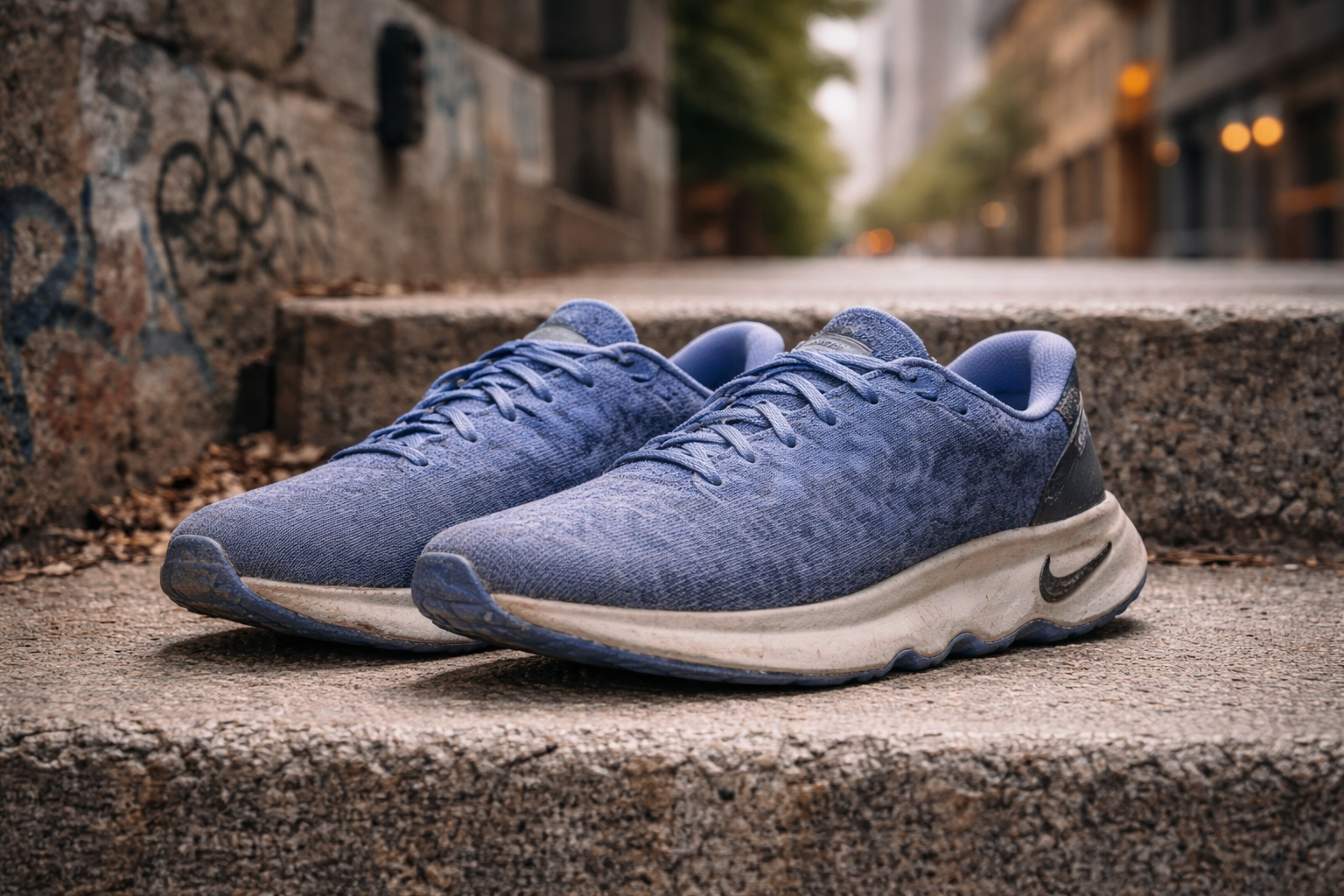
Hard surfaces accelerate this process. Pavement and concrete provide almost no natural shock absorption, which means shoes absorb the full impact of every step.
Typical Lifespan of Walking Shoes
While durability varies by model and materials, most walking shoes fall into these ranges.
| Shoe Type | Typical Lifespan |
| Lightweight walking or running shoes | 500–700 km |
| Well-cushioned walking shoes | 600–800 km |
| Trail or hiking shoes | 700–1,000 km |
Distance vs Steps
Many people track activity using steps rather than distance. A pair of walking shoes can absorb nearly one million steps before needing replacement.
| Distance | Approximate Steps |
| 5 km | 6,500–7,000 steps |
| 10 km | 13,000–14,000 steps |
| 500 km | ~650,000–700,000 steps |
| 800 km | ~1,000,000 steps |
How long Do shoes last?
Travellers often underestimate how far they walk during sightseeing. Research into urban tourism suggests visitors typically walk 8–12 km per day while exploring a city.
At that rate:
- 50 sightseeing days can reach 500–600 km
- someone walking 5 km per day may reach 700 km in about five months
Frequent walkers often replace shoes sooner than expected for this reason.
Signs Your Walking Shoes Are Worn Out
Mileage provides a guideline, but the condition of the shoe is just as important.
Common signs include:
- Flattened cushioning: Shoes feel firmer or less comfortable.
- Uneven outsole wear: The rubber sole shows worn areas, often on the heel or forefoot.
- Increased foot fatigue: Feet feel more tired after distances that previously felt comfortable.
- Visible midsole creasing: Deep creases in the foam often indicate the cushioning has compressed permanently.
Quick Test: Are Your Shoes Worn Out? You can perform a few simple checks at home.
- The thumb test
Press into the midsole foam. If it feels hard and does not rebound easily, cushioning may be worn out. - The flat surface test
Place shoes on a flat table. If they tilt or lean to one side, the sole may be unevenly worn. - Comfort check
If distances that once felt easy now cause foot fatigue, the cushioning may have degraded.
Common Wear Patterns
Looking at the outsole can also reveal how a shoe is wearing out.
- Heel wear often indicates heel-first walking.
- Forefoot wear suggests faster walking or running-style movement.
- Uneven wear on one side may indicate gait imbalance.
City Walking vs Trail Walking
Surface type affects shoe lifespan.
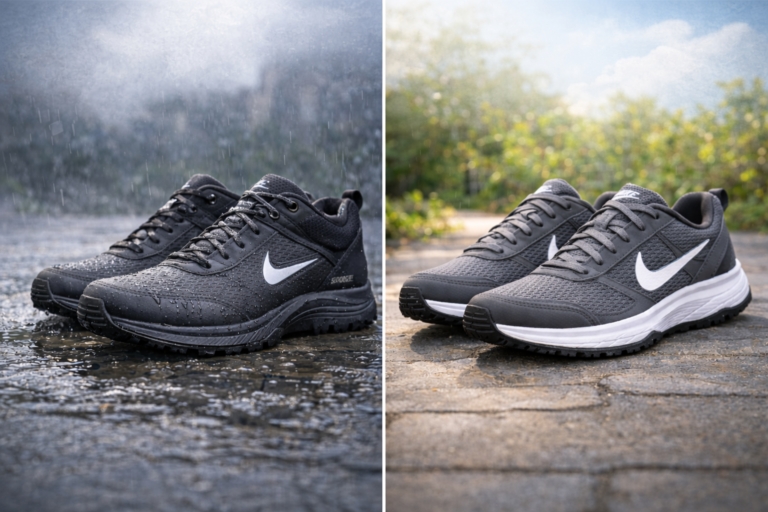
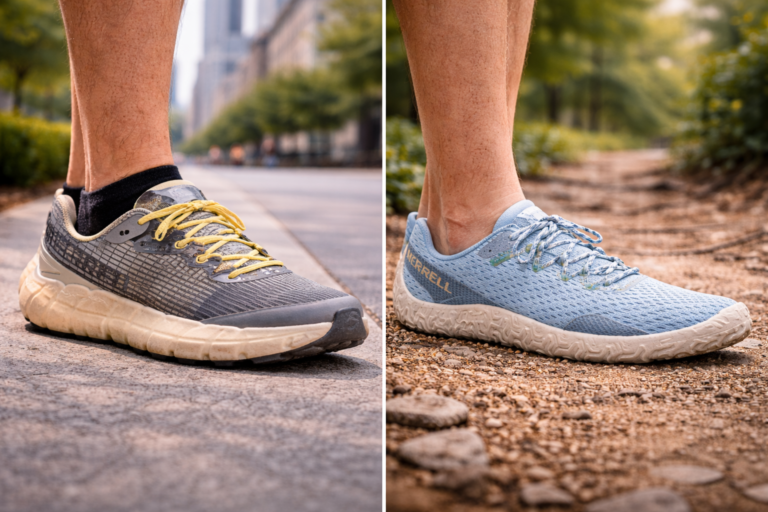
City walking tends to wear shoes faster because pavement is harder than dirt or grass. Trail surfaces absorb some impact naturally, which reduces stress on the midsole.
Trail shoes may last longer in terms of cushioning, but aggressive rubber outsoles can wear down faster if used mostly on pavement.
Check out our article on trail running shoes vs. walking shoes here.
Materials Also Affect Durability
Upper materials can influence how long a shoe lasts.
- Mesh uppers are lightweight and breathable but may wear faster.
- Leather uppers are more durable and resistant to abrasion.
However, in most cases the midsole cushioning wears out before the upper material fails.
Read more about leather vs. mesh walking shoes here.
How to Make Walking Shoes Last Longer
A few habits can extend the life of walking shoes.
- Rotate between two pairs
Foam midsoles recover better when given time between walks. - Use shoes for their intended purpose
Running shoes used on rough trails wear out faster. - Keep shoes dry and clean
Moisture and dirt can accelerate material breakdown.
Choosing Comfortable Walking Shoes
Selecting shoes with proper cushioning and support helps delay fatigue as shoes age.
For more guidance on selecting comfortable footwear see:
What Makes a Good City Walking Shoe?
How Much Cushioning Do Walking Shoes Need?