Hoka vs On Running: Which Is Best for City Walking?

Both Hoka and On Running have become extremely popular with travellers and urban walkers. You’ll see them everywhere in major cities, often worn by people who spend long days on their feet.
Both brands design shoes that prioritise cushioning, comfort, and impact absorption, which makes them suitable for walking on hard surfaces like pavement.
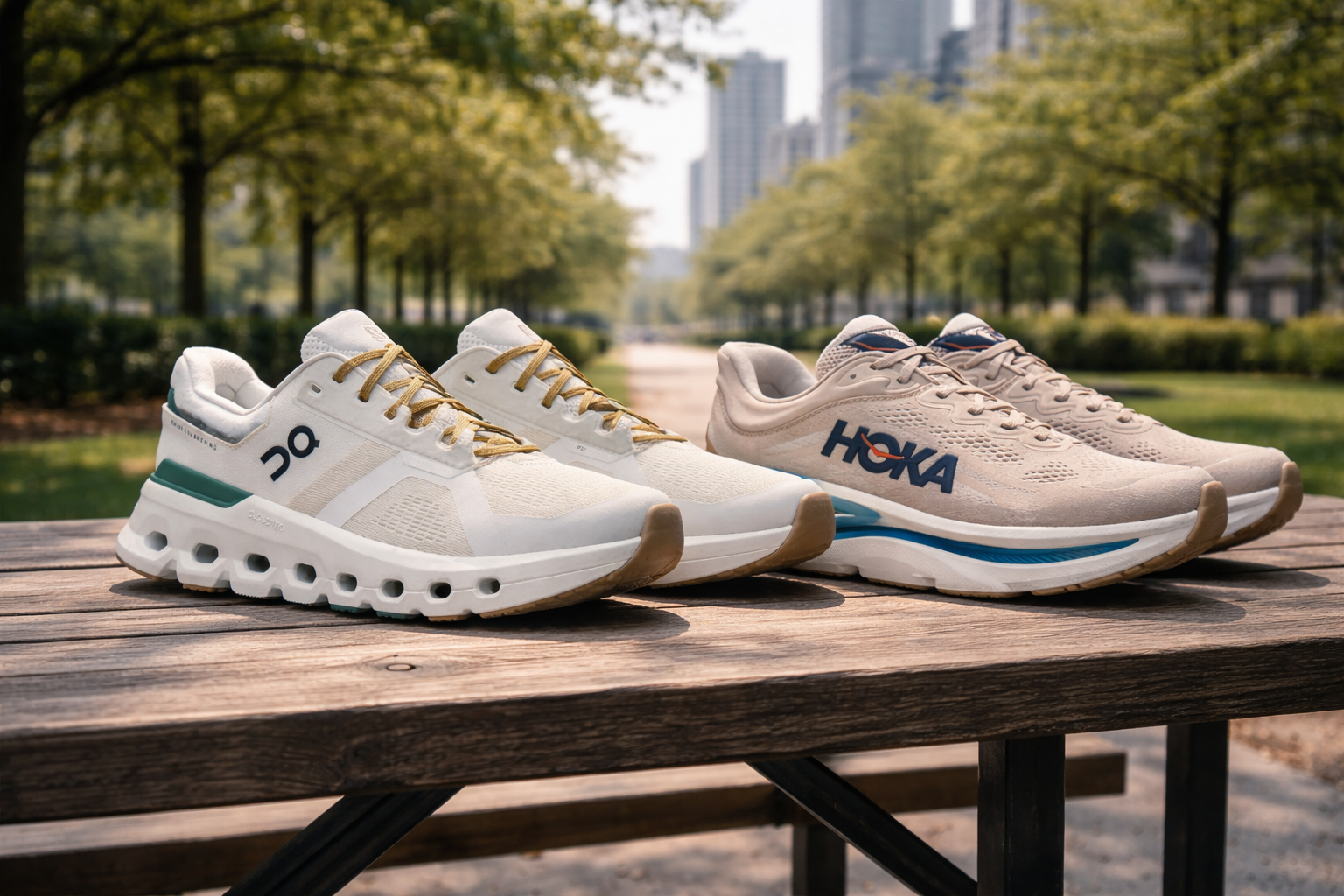
However, they feel quite different. Hoka focuses on maximum cushioning, while On Running emphasises lightweight responsiveness.
Understanding these differences will help you decide which brand works best for city walking.
Quick Verdict
- Choose Hoka if: you want maximum cushioning for long walking days on hard pavement.
- Choose On Running if: you prefer a lighter, firmer shoe with a more responsive feel.
- Best for long sightseeing days: Hoka
- Best lightweight travel shoe: On Running
Comparison Table:
| Feature | Hoka | On Running |
| Cushioning | Very soft, thick midsoles | Firmer, responsive cushioning |
| Weight | Moderate | Usually lighter |
| Stability | Wide base and stable ride | Slightly more flexible |
| Fit | Often roomier, wide options available | Traditionally narrower fit |
| Best for | Long walking days and comfort | Lightweight travel walking |
Cushioning and Comfort
The biggest difference between Hoka and On Running is how the cushioning feels.
Hoka shoes are known for maximal cushioning. Their thick foam midsoles absorb impact and create a soft, plush feeling underfoot. This can be especially helpful during long walking days on concrete.
On Running shoes use a different system called CloudTec, which uses hollow pods in the sole that compress when you land and then firm up during push-off.
This creates a ride that feels:
- firmer
- more responsive
- slightly closer to the ground
In simple terms:
- Hoka = softer and more cushioned
- On Running = firmer and more responsive
Also check out: Best shoe brands for city walking and the city walking shoes guide.
Why Pavement Changes the Choice
Most city walking happens on concrete and asphalt, which are much harder than natural surfaces like dirt trails.
Hard surfaces produce repeated impact with every step. Over 15,000–20,000 steps in a day, that impact can lead to fatigue in the feet, knees, and hips.
Because of this, many frequent walkers prefer high-cushion shoes like Hoka for long sightseeing days.
Lighter shoes like On Running can feel more agile and responsive, but they may provide less shock absorption during very long walking days.
Weight and Feel
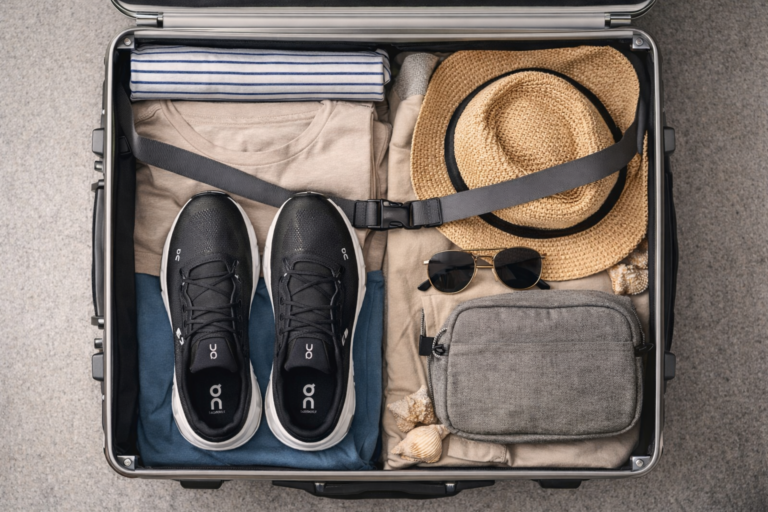
On Running shoes are typically lighter and more flexible, which makes them popular for everyday travel walking.
Hoka shoes, while still relatively lightweight for their size, often feel slightly bulkier because of their thick midsoles.
For people walking 10–15 km per day, shoe weight can matter. Lighter shoes reduce fatigue across thousands of steps.
However, the trade-off is cushioning. Hokas usually absorb more impact during long walks.
Stability
Hoka shoes often have wider midsoles and larger bases, which improves stability during walking.
This can make them feel more grounded and secure during long periods on your feet.
On Running shoes tend to feel more agile and flexible, but they may feel slightly less stable for some people.
Fit and Foot Shape
Fit can also influence which brand works best.
Hoka shoes are often available in wide sizes, which helps people with broader feet.
On Running shoes traditionally have a narrower fit, although newer models have improved the toe box width.
If you have wide feet, Hoka models may be easier to fit comfortably.
Best Models for City Walking
Some models from each brand perform particularly well for walking.
Popular Hoka Walking Models
- Hoka Clifton
One of the most popular cushioned walking shoes, balancing soft foam cushioning with relatively low weight. - Hoka Bondi
Hoka’s most cushioned model, designed for maximum comfort during long walking days. - Hoka Transport
A model designed specifically for urban walking and travel.
Popular On Running Walking Models
- On Cloud 5
One of the lightest travel-friendly walking shoes with a convenient quick-lace system. - On Cloudmonster
Provides more cushioning than most On models while maintaining a responsive feel. - On Cloudtilt
A newer model designed for comfort during urban walking.
Durability and Outsole Wear
Both Hoka and On Running use lightweight foam midsoles designed to prioritise comfort.
Most running-style walking shoes typically last 500–800 km of use.
However, there are small differences:
- Hoka outsoles are usually thicker and may wear slightly slower.
- On Running shoes sometimes show outsole wear earlier because of the exposed CloudTec pods.
For most travellers, either brand will last through multiple trips before needing replacement.
Which Brand Is Better for Travel?
For travellers, both brands work well but for different reasons.
Hoka advantages for travel
- excellent cushioning for long sightseeing days
- comfortable for extended walking
On Running advantages for travel
- lighter weight
- sleeker appearance
- easy to pack
Travellers who expect to walk 10–15 km per day often prefer Hokas, while people looking for lightweight everyday shoes often choose On Running.
When Hoka Is the Better Choice
Hoka shoes are usually the better option if:
- you walk long distances every day
- you want maximum cushioning
- you spend long hours standing
- you prefer a softer ride
Many people find Hokas particularly comfortable on hard urban surfaces.
When On Running Is the Better Choice
On Running shoes may be better if:
- you want lightweight travel shoes
- you prefer a firmer, responsive feel
- you want shoes that work for both walking and everyday wear
- you value a sleeker design
On shoes are often chosen by travellers who want footwear that works for both walking and casual style.
FAQ
Are Hoka shoes good for walking?
Yes. Hoka shoes are widely used for walking because their thick midsoles provide excellent shock absorption and comfort during long periods on pavement.
Are On Running shoes good for city walking?
Yes. On Running shoes are lightweight and flexible, which makes them well suited to urban walking and travel.
Which brand is better for long walking days?
Hoka usually performs better for very long walking days because of its softer cushioning and greater impact absorption.
Which brand is lighter?
On Running shoes are generally lighter and feel more agile during walking.