Daypack vs Hiking Backpack: What’s the Difference?

Backpacks designed for walking and travel come in many styles, but two of the most common types are daypacks and hiking backpacks. While they may look similar, they are built for different purposes.
Understanding how they differ helps you choose the right pack for city exploration, day hikes, or longer outdoor trips.
What Is a Daypack?
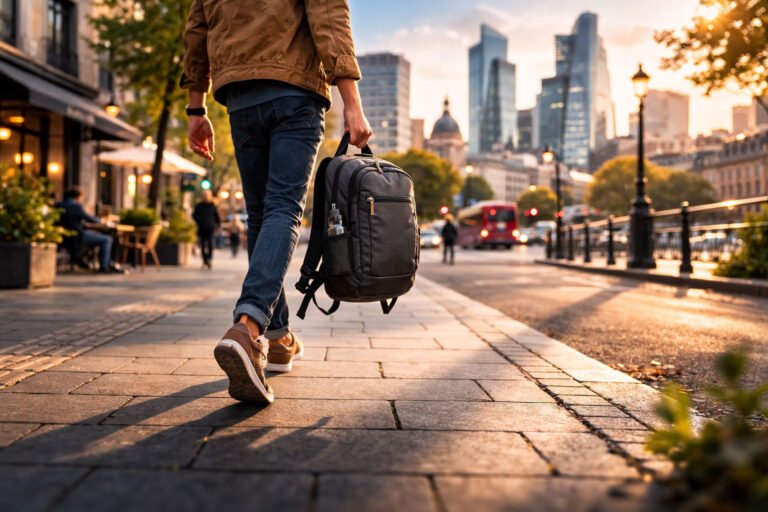
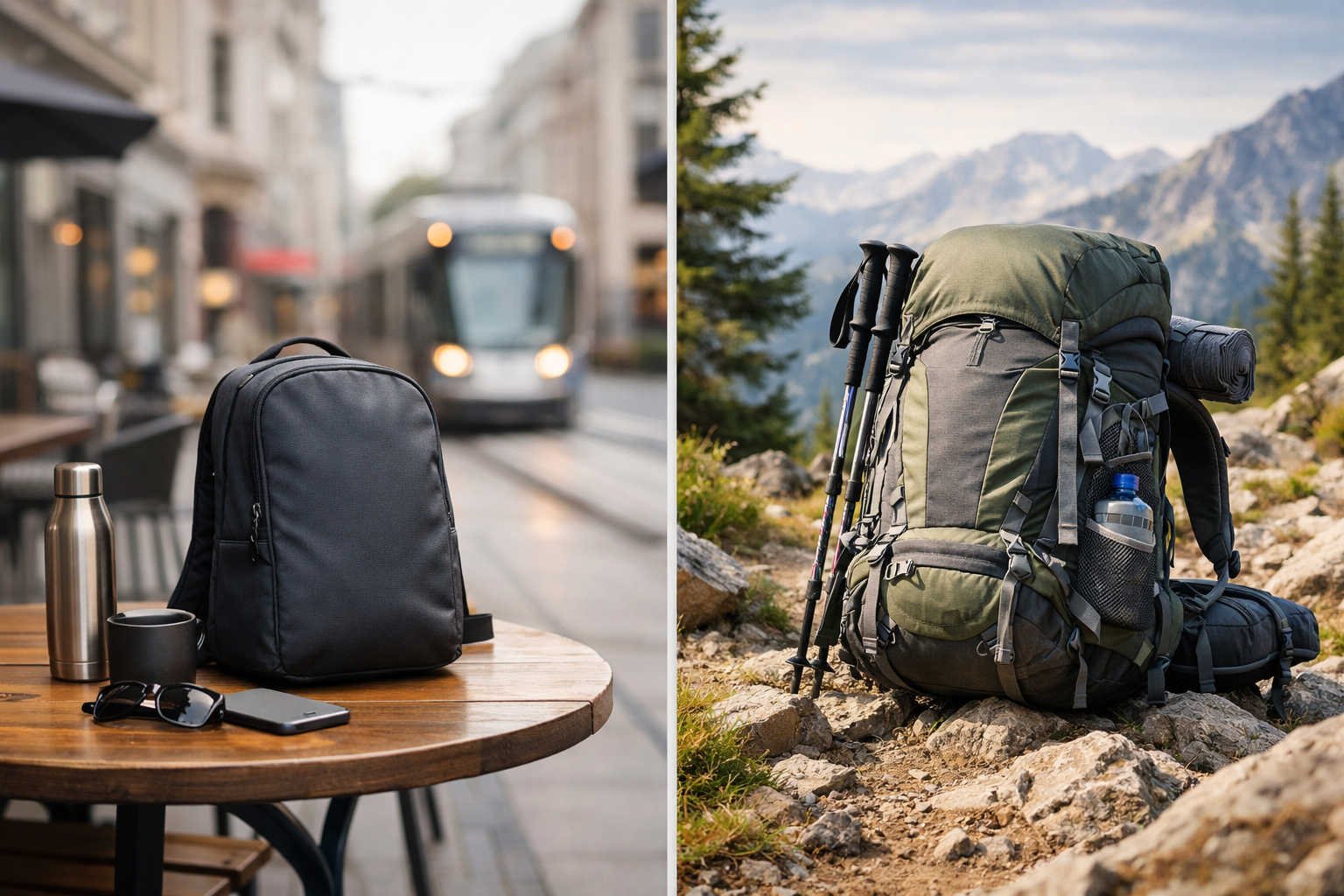
A daypack is a small, lightweight backpack designed to carry essentials for a single day. These packs are commonly used for city walking, commuting, travel, and short outings.
Most daypacks range from 10 to 25 litres in capacity, with 15–20 litres being the most common size.
Typical items carried in a daypack include:
- water bottle
- phone and power bank
- sunglasses
- snacks
- light jacket
- small camera
Because they carry lighter loads, daypacks are usually simple and compact, without heavy support structures.
Typical features include:
- lightweight construction
- basic internal organisation
- slim profile
- minimal frame support
What Is a Hiking Backpack?
A hiking backpack is designed for longer outdoor trips and heavier gear loads. These packs allow hikers to carry items such as extra clothing, food, water, and safety equipment.
Hiking backpacks usually range from 25 to 60 litres or more, depending on whether they are used for day hikes or multi-day trips.
To support heavier loads, they include features that improve weight distribution and stability.
Common features include:
- padded hip belt
- sternum strap
- internal or external frame
- compression straps
- hydration reservoir sleeve
- gear attachment points
These design elements allow hikers to carry more equipment comfortably over longer distances.
Key Differences Between Daypacks and Hiking Backpacks
Although both types of packs are used for walking, their design priorities are quite different.
Capacity
Daypacks are smaller, typically 10–25 litres, and designed for light daily gear.
Hiking backpacks are larger, usually 25 litres or more, to accommodate extra clothing, food, and outdoor equipment.
Load Support
Daypacks rely mainly on shoulder straps to carry weight.
Hiking backpacks use hip belts and internal frames to distribute weight across the body, which improves comfort when carrying heavier loads.
Structure
Daypacks are generally soft and flexible.
Hiking backpacks are more structured to maintain stability and support.
Features
Daypacks focus on convenience features such as simple compartments and quick-access pockets.
Hiking backpacks include technical features like hydration sleeves, compression straps, and gear attachments.
Weight
Daypacks are lighter because they carry smaller loads.
Hiking backpacks weigh more due to their stronger materials and support systems.
When to Use a Daypack
Daypacks are ideal for situations where you only need to carry a few essentials, such as:
- city walking and sightseeing
- commuting
- travel day trips
- short walks
Their compact size makes them easy to use in crowded environments and on public transport.
When to Use a Hiking Backpack
Hiking backpacks are better suited for trips where you need to carry more equipment, including:
- trail hiking
- mountain walks
- wilderness trips
- multi-day trekking
Their support systems make heavier loads more comfortable to carry over longer distances.
Frequently Asked Questions
What size is a typical daypack?
Most daypacks range from 10 to 25 litres, with 15–20 litres being the most common size for travel and city walking.
Can you use a hiking backpack for everyday travel?
Yes, but hiking backpacks are often larger and more structured than necessary for city use. Many travellers prefer smaller daypacks for everyday walking.
What size hiking backpack is best for day hikes?
For most day hikes, a backpack between 20 and 30 litres provides enough space for water, food, and extra clothing layers.
Is a hip belt necessary on a daypack?
Usually not. Hip belts become useful when carrying heavier loads, but most city daypacks carry light gear that can be supported comfortably by shoulder straps alone.