Best Socks For Walking Long Distances

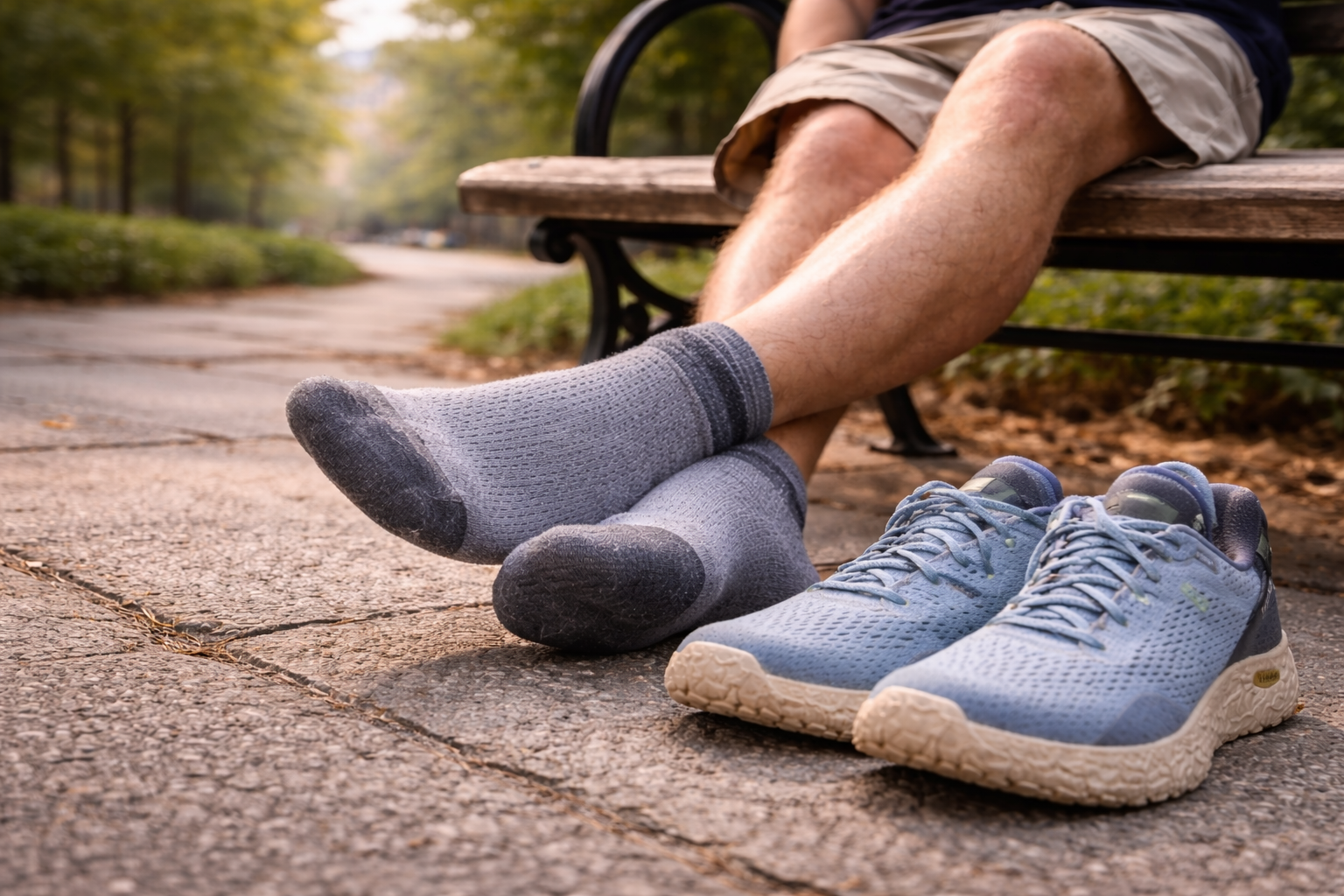
The best socks for walking long distances are moisture-wicking socks made from merino wool or synthetic blends. These materials keep feet dry, reduce friction, and help prevent blisters during long walking days.
Socks receive less attention than shoes, but they play a major role in walking comfort. The wrong socks trap moisture and increase friction, while good walking socks regulate temperature, manage sweat, and cushion pressure points.
For travellers and regular walkers this matters. Many people walk 8–12 km per day while sightseeing, often on hard pavement. Over that distance, socks experience thousands of repeated friction points. Choosing the right socks can make long walking days significantly more comfortable.
Quick Comparison of Walking Sock Materials:
| Material | Breathability | Moisture Control | Durability | Best For |
| Merino wool | Excellent | Excellent | High | Travel, hiking, long walks |
| Polyester blends | Very good | Very good | High | Running and city walking |
| Coolmax | Very good | Excellent | Moderate | Warm climates |
| Cotton | Poor | Poor | Moderate | Short casual walks |
Avoid Cotton
Cotton socks are common but usually a poor choice for long-distance walking.
Cotton absorbs moisture and holds it against the skin. Wet socks increase friction between the foot and the shoe, which raises the risk of blisters.
Once cotton becomes damp from sweat or rain, it also dries slowly. During long walking days this can quickly lead to discomfort.
For casual daily use cotton may be fine, but for long-distance walking it is rarely ideal.
Also read:
- Hoka Vs. On Running – Which is best for walking?
- Guide to city walking shoes.
- How to fit shoes correctly to avoid pain and blisters.
Choose Moisture-Wicking Materials
Good walking socks move moisture away from the skin. This helps keep feet dry and reduces friction.
Common moisture-wicking materials include:
• Merino wool
• Polyester blends
• Coolmax or polypropylene fibres
These materials pull moisture away from the skin and allow it to evaporate through the shoe.
Dry feet are important because moisture softens skin and increases the likelihood of blisters.
Merino Wool: One of the Best Materials
Merino wool is widely considered one of the best materials for walking socks.
Merino fibres naturally wick moisture away from the skin and help regulate temperature in both warm and cool conditions.
Key advantages include:
• moisture control
• temperature regulation
• natural odour resistance
• soft fibres that reduce irritation
Because of these properties, merino wool socks are commonly used for hiking, running, and long-distance walking.
Look for Cushioning in Key Areas
Many walking socks include extra padding in high-pressure areas, such as:
• the heel
• the ball of the foot
• the toes
Additional cushioning helps absorb pressure from repeated impact during long walks.
Moderate cushioning usually works best for city walking. Extremely thick socks can feel warm in hot weather and may make shoes feel tighter.
A Secure Fit Matters
A good walking sock should stay in place without slipping or bunching.
Loose socks can create folds of fabric that rub against the skin and increase friction.
Many performance socks include features such as:
• elastic arch support
• reinforced heel cups
• compression zones
These help the sock stay secure during long walks.
Consider Double-Layer or Liner Socks
Some walkers use liner socks, which are thin socks worn underneath a thicker outer sock.
This system allows friction to occur between the sock layers rather than directly against the skin. Liner socks also help wick sweat away from the foot.
This technique is common among hikers and long-distance walkers.
Choose the Right Thickness
Sock thickness affects comfort, temperature, and shoe fit.
Thin socks:
• best for warm weather
• lighter and more breathable
• dry quickly
Medium-cushion socks:
• provide extra comfort for long walking days
• balance cushioning and breathability
Thick socks:
• best for cold weather or hiking boots
• provide extra padding but feel warmer
For most travel and city walking, medium-cushion socks are the most versatile choice.
Common Sock Mistakes Walkers Make
Many people experience foot discomfort because of simple sock mistakes.
Common issues include:
• wearing cotton socks for long walks
• choosing socks that are too thick for the shoe
• wearing loose socks that bunch up
• reusing damp socks during long travel days
Avoiding these mistakes can significantly reduce blister risk.
FAQ
Are thicker socks better for walking?
Not always. Thicker socks provide more cushioning but can also make shoes feel tighter and warmer. For most city walking, medium-cushion socks provide the best balance of comfort and breathability.
How many pairs of socks should you bring for travel?
Two or three good pairs are usually enough. Rotating socks allows them to dry fully between uses, which helps maintain comfort and hygiene.
Are running socks good for walking?
Yes. Many running socks are designed to manage moisture and reduce friction, which makes them suitable for long-distance walking.
Do expensive socks last longer?
Often they do. High-quality walking socks use stronger fibres and reinforced areas around the heel and toe, which can extend their lifespan.
Should socks be tight or loose?
Walking socks should fit snugly without being restrictive. A secure fit helps prevent bunching and reduces friction that can cause blisters.