
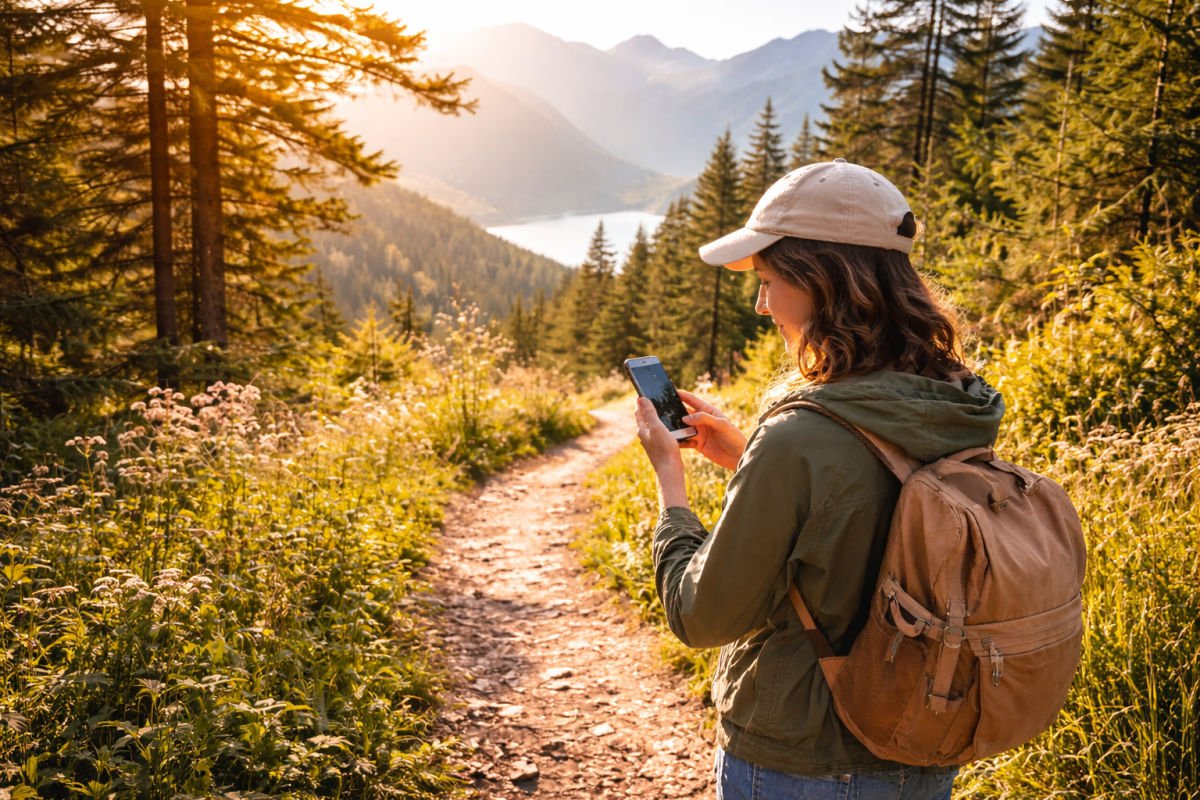
10 Best Apps for the Perfect Trail Walk

There’s something timeless about walking a trail. Dirt under your shoes. Sun filtering through trees. The quiet rhythm of your own pace.
But while trail walking feels simple, a little preparation goes a long way.
The right apps can help you discover better routes, stay safe, navigate confidently, and even document the experience.
Here are 10 of the best apps to make your next trail walk smoother, safer, and more enjoyable.
1. AllTrails
AllTrails is one of the most popular trail discovery apps worldwide — and for good reason.
You can search by difficulty, length, elevation, user rating, and trail type. Reviews from other walkers give real insight into current conditions.
Offline maps (with premium) are especially useful if you lose signal.
Best for: Finding and planning trail routes anywhere.
2. Gaia GPS
If you’re heading into more remote terrain, Gaia GPS offers detailed topographic maps and strong offline functionality.
It’s especially useful for understanding elevation changes and terrain before you set out.
Best for: More adventurous or less marked trails.
3. Komoot
Komoot lets you build your own custom walking routes with detailed terrain breakdowns.
You can see surface types, elevation, and highlights along the way. It’s excellent for planning scenic trail walks with structure.
Best for: Personalised route building.
4. Google Maps
It might seem obvious, but Google Maps is still incredibly useful.
Download offline maps before heading out. Switch to terrain view for elevation awareness. Use it to navigate to trailheads and nearby facilities.
Best for: Backup navigation and general planning.
5. Map My Walk
If you like tracking your distance, pace, and elevation, Map My Walk keeps everything simple.
It helps you understand how far you’ve gone and can motivate you to gradually increase distance over time.
Best for: Tracking fitness progress.
6. Strava
Strava isn’t just for cyclists and runners.
It tracks your walk, records elevation, and allows you to compare previous outings. If you enjoy measurable progress, this adds a layer of motivation.
Best for: Performance tracking and personal goals.
7. PeakFinder
Walking in mountainous areas? PeakFinder identifies surrounding peaks just by pointing your phone at them.
It adds a deeper appreciation to scenic trail walks.
Best for: Learning about the landscape around you.
8. A Reliable Weather App
Weather changes quickly on trails.
Use a detailed weather app with hourly forecasts and alerts. Checking conditions before you go can prevent uncomfortable — or unsafe — situations.
Best for: Planning around heat, rain, or storms.
9. First Aid App (Red Cross or Local Equivalent)
Most trail walks are uneventful — but it’s smart to be prepared.
A first aid app provides step-by-step guidance for minor injuries like cuts, blisters, sprains, or heat exhaustion.
Best for: Safety and peace of mind.
10. A Journaling or Photo App
Trail walks aren’t just physical — they’re reflective.
Apps like Day One or even a simple notes app allow you to record thoughts, route details, and moments you want to remember.
Sometimes the best part of a walk is reflecting on it later.
Best for: Capturing memories.
Bonus Mentions
Cairn – Shows where mobile coverage exists along trails.
Leave No Trace – Teaches responsible outdoor ethics.
Spotify or Calm – For those who enjoy ambient soundtracks on long stretches.
Final Thoughts
Trail walking may feel simple — and that’s part of its beauty — but smart preparation makes it even better.
The right apps won’t replace the experience of nature, but they can enhance it. They help you plan smarter, walk safer, and remember more.
Whether you prefer quiet forest paths or open coastal tracks, a little digital support can make your time outdoors more confident and enjoyable.