How To Fit Shoes the Right Way

A shoe can have great cushioning, support, and materials, but if it doesn’t fit properly it will never be comfortable. Poorly fitting shoes are a common cause of blisters, foot fatigue, and long-term foot problems.
For people who walk regularly—especially travellers exploring cities on foot—fit becomes even more important. Many visitors walk 8–12 kilometres per day while sightseeing, so small fit issues quickly become noticeable.
This guide explains how walking shoes should fit, how to test them properly, and common mistakes people make when buying shoes.
Why Shoe Fit Matters
Shoes that fit well allow the foot to move naturally while preventing excessive movement inside the shoe.
Shoes that are too tight create pressure points and restrict circulation. Shoes that are too loose allow the foot to slide, increasing friction and the risk of blisters.
Walking shoes should feel secure, stable, and comfortable as soon as you try them on.
Interesting reading:
How Walking Shoes Should Fit
A properly fitted walking shoe should have four key characteristics:
• Toe room — about 10–15 mm of space in front of the longest toe
• Secure heel — minimal slipping when walking
• Comfortable width — snug but not tight across the forefoot
• No pressure points — the shoe should feel comfortable immediately
If any of these feel wrong, try a different size or model.
Leave Space in the Toe Box
Your toes should move naturally without pressing against the front of the shoe. A common guideline is to leave about a thumb’s width (10–15 mm) between your longest toe and the front of the shoe.
This space allows for natural movement, foot swelling during long walks, and slight forward movement when walking downhill.
Shoes that are too short often lead to bruised toenails or toe discomfort.
Make Sure the Heel Is Secure
While the front of the shoe should allow space, the heel should feel secure.
Your heel should remain stable while walking, with minimal slipping. Excessive heel movement increases friction and can cause blisters.
A structured heel counter and proper lacing usually help keep the heel in place.
Check Width and Forefoot Comfort
Foot width varies significantly between individuals. Some people require wider shoes, particularly in the forefoot.
The shoe should feel snug but not tight across the widest part of the foot. If the sides feel restrictive or create pressure, the width may be too narrow.
Many brands offer wide or extra-wide versions, which can greatly improve comfort.
Feet Expand During Long Walks
Feet expand slightly during long periods of walking due to heat, circulation, and repeated impact.
Shoes that feel snug in the store may feel tighter after several hours of activity. Allowing adequate toe room and trying shoes on later in the day helps account for this natural expansion.
Try Shoes Later in the Day
Feet naturally swell during the day, especially after walking.
Trying on shoes in the afternoon or evening provides a more realistic sense of how they will feel during longer walks.
Wear the Socks You Plan to Walk In
Socks affect shoe fit more than many people realise.
Always try shoes with the socks you plan to wear regularly. Walking socks made from merino wool or synthetic fibres help wick moisture and reduce friction.
Different sock thicknesses can noticeably change shoe fit.
Always Try Both Shoes
Many people have one foot slightly larger than the other.
Always try both shoes and make sure the fit works for the larger foot.
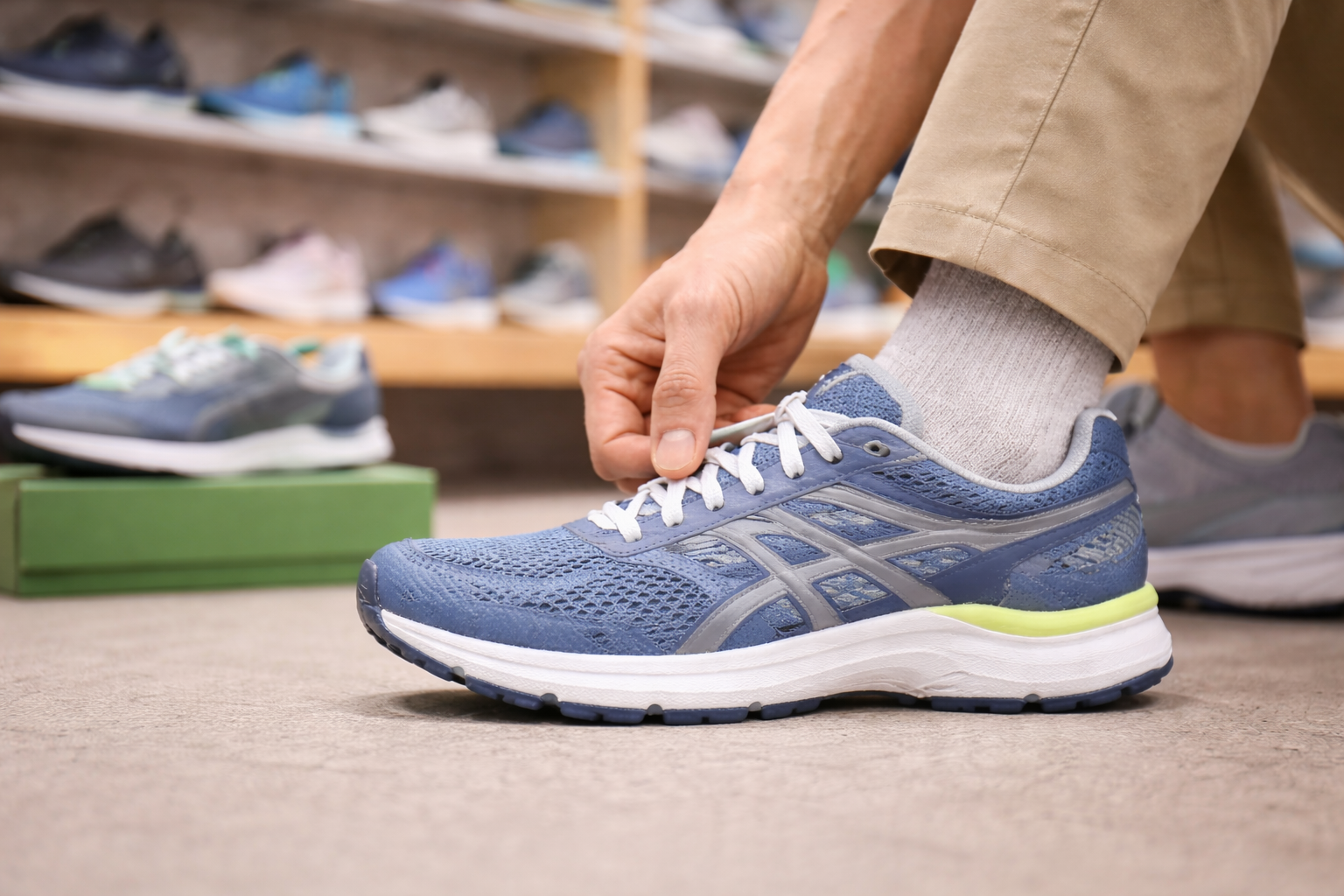
Walk Around Before Buying
Standing still in a shoe reveals little about how it will perform.
Walk around for several minutes and check for:
• pressure points
• heel movement
• toe space while stepping
• overall comfort
Shoes that feel uncomfortable during a short test walk are unlikely to improve later.
Understand That Sizes Vary by Brand
Sizing is not perfectly consistent between brands.
A size that fits well in one brand may feel different in another due to differences in shoe shape, width, and construction.
Focus on fit and comfort rather than the number on the label.
Common Shoe Fitting Mistakes
Common mistakes include:
• buying shoes that are too tight
• assuming shoes will stretch significantly
• ignoring width requirements
• choosing style over comfort
Walking shoes should prioritise fit and comfort, especially for long distances.
Signs That Shoes Don’t Fit Properly
Warning signs of poor fit include:
• persistent heel rubbing
• pressure on the toes
• numbness or tingling
• bulging along the sides of the shoe
• frequent blisters
If these occur regularly, the shoe may not fit correctly.
Quick Shoe Fit Checklist
When trying on walking shoes:
• leave 10–15 mm of space in front of your longest toe
• ensure the heel stays secure with minimal slipping
• the widest part of your foot aligns with the widest part of the shoe
• the shoe feels comfortable immediately
• there are no pressure points when walking
If any of these feel wrong, try a different size or model.