
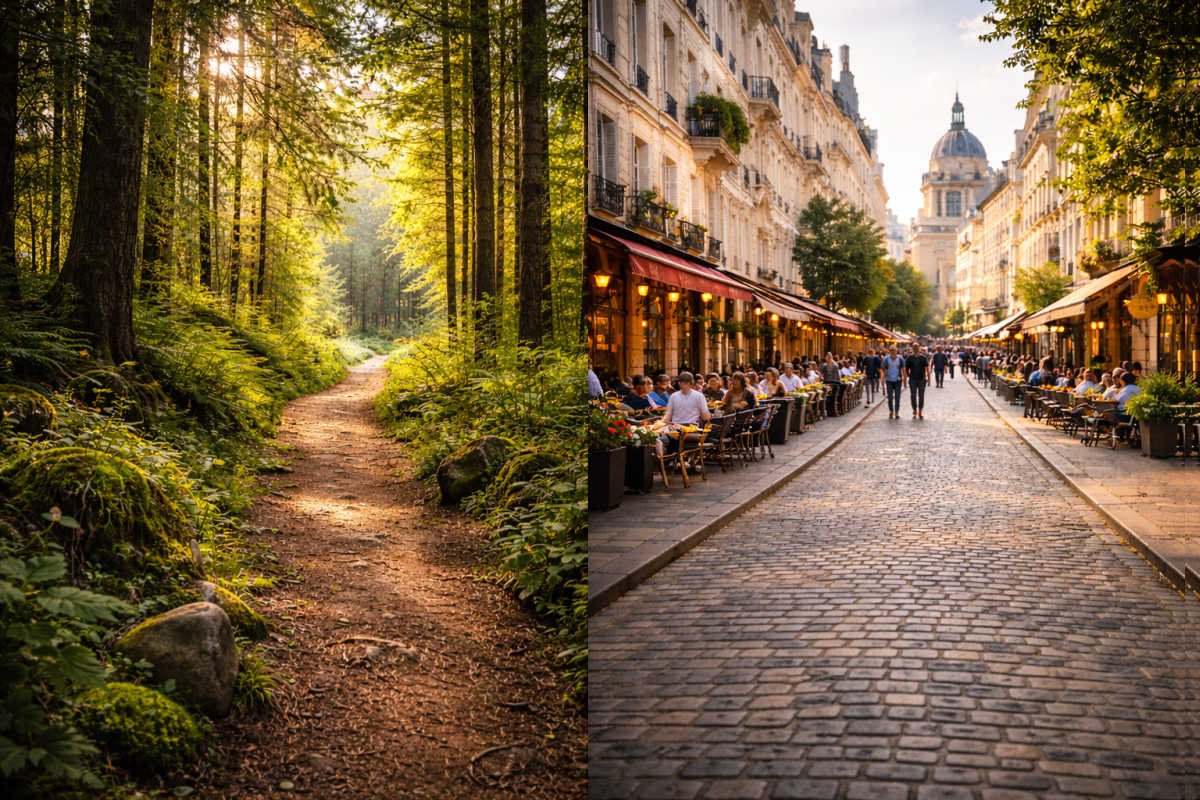
City vs Trail Day Walks: Pros and Cons

Not all day walks are created equal.
Some days call for cobblestone streets, hidden laneways, and riverside cafés. Other days demand open skies, dirt tracks, and the quiet rhythm of nature.
So which is better — a city walk or a trail walk?
The honest answer: it depends on what you need that day.
Here’s a balanced look at the pros and cons of each, so you can choose the right kind of walk for your mood, energy, and goals.
What Is a City Day Walk?
A city day walk is urban exploration on foot. It might include streets, laneways, parks, waterfronts, markets, architecture, and neighbourhoods you’ve never seen before.
It’s immersive, dynamic, and often spontaneous.
Pros of City Day Walks
Accessibility
Cities are easy to reach and easy to navigate. Public transport, cafés, toilets, and water refill stations are usually close by. You don’t need special gear — just comfortable shoes and a light day pack.
Variety and Stimulation
Architecture, street art, food smells, conversations drifting from cafés — there’s constant sensory interest. Every corner feels different. You’re never short of something to observe.
Safety and Backup Options
If you’re tired, you can jump on public transport. If the weather turns, you can duck into a museum or café. Support is always nearby.
Flexibility
City routes are easy to adjust. You can shorten, extend, detour, or completely change direction without much risk.
Cons of City Day Walks
Noise and Crowds
Traffic, tourists, construction, busy intersections — it can be overstimulating.
Hard Surfaces
Concrete and pavement are tough on feet and joints. Over long distances, fatigue can build faster than you expect.
Constant Distraction
Cities demand attention. That can be exciting, but it’s not always mentally restful.
What Is a Trail Day Walk?
A trail day walk usually means nature — bushland, coastal tracks, forests, hills, or mountains. Infrastructure is lighter. The experience is slower and more open.
It’s often quieter and more physically immersive.
Pros of Trail Day Walks
Natural Calm
Nature reduces stress in a way cities rarely can. There’s space to think. Space to breathe. Fewer interruptions.
Softer Terrain
Dirt paths and natural ground tend to be easier on joints than pavement. Your stride adjusts more naturally.
Scenery and Immersion
Wide views, wildlife, water, trees — trail walks often feel expansive and grounding.
Digital Detox
Phone signal may be limited. Notifications are less intrusive. You’re more present.
Cons of Trail Day Walks
Accessibility
You usually need transport to reach the trailhead. It’s not always spontaneous.
Limited Facilities
Fewer toilets, fewer refill points, fewer cafés. You need to pack more and plan better.
Weather Exposure
Less shelter. If it rains or gets very hot, you feel it more directly.
Navigation Risk
Wrong turns are more consequential in nature. Good awareness and preparation matter.
Which Is Better?
It depends on what you’re looking for.
If you want culture, food, and energy — choose a city walk.
If you want mental clarity and physical immersion — choose a trail.
If you’re new to long walks, cities may feel safer and more flexible. If you’re comfortable planning and packing, trails can feel more freeing.
The Best of Both Worlds
Some of the most satisfying walks combine both.
Urban river paths. Coastal city tracks. Large botanical gardens. Green corridors woven through neighbourhoods.
You get the accessibility of a city with the calm of nature.
These hybrid walks often deliver the best balance — stimulation without overwhelm.
Final Thoughts
Whether you’re walking a vibrant city street or a quiet forest path, the core experience is the same: moving slowly through a place with intention.
Some days call for architecture and espresso.
Other days call for dirt trails and silence.
The beauty of walking is that both are available — you just choose your rhythm.